Success creates a familiar dilemma for organizations trying to solve complicated social problems. A program begins producing promising results, interest grows, and the question quickly becomes how to bring the same approach to more people.
Expansion can attract funding, increase visibility, and extend services into communities that need them. But growth also introduces risks. Relationships become harder to maintain, operations become more complicated, and the practices that made a small program effective may prove difficult to reproduce.
Mike Feinberg has encountered this challenge from two different directions.
As co-founder of KIPP, he helped build an educational initiative that began in a Houston classroom in 1994 and eventually grew into a national network of more than 270 public charter schools.
Now, as co-founder of WorkTexas, he is helping develop a workforce training model built around local employers, community partnerships, and relationships with graduates that continue for years after they leave the classroom.
The organizations differ in their missions and structure, but they raise a common question. How can an educational model reach more people without sacrificing the qualities that make it valuable?
What Mike Feinberg Learned From Building KIPP
When Feinberg and Dave Levin launched KIPP, their ambition was to expand academic opportunity for students from underserved communities.
The schools emphasized rigorous instruction, high expectations, and preparation for college. Their growth demonstrated that an approach developed in one community could be adapted across a much larger educational network.
Feinberg’s career in public charter school leadership established him as a prominent figure in efforts to rethink how schools serve students facing barriers to opportunity.
Yet the experience also taught him that institutional growth and student outcomes are not interchangeable.
By the mid-2010s, more than half of KIPP Houston alumni were graduating from four-year colleges. It was a significant milestone, but Feinberg began examining what had happened to students who followed other paths.
Some were building successful careers without degrees. Others had attended college but accumulated substantial debt without achieving the economic stability they expected.
Those findings helped change his understanding of what educational institutions should measure.
A school could expand, graduate more students, and report strong academic results while still leaving important questions unanswered about graduates’ lives.
That lesson became central to Feinberg’s later work.
When he co-founded WorkTexas in 2020 alongside Jim “Mattress Mack” McIngvale and Vanessa Ramirez, the organization adopted a model focused not only on training completion but also on employment, wages, and career development.
Why the WorkTexas Model Depends on Relationships
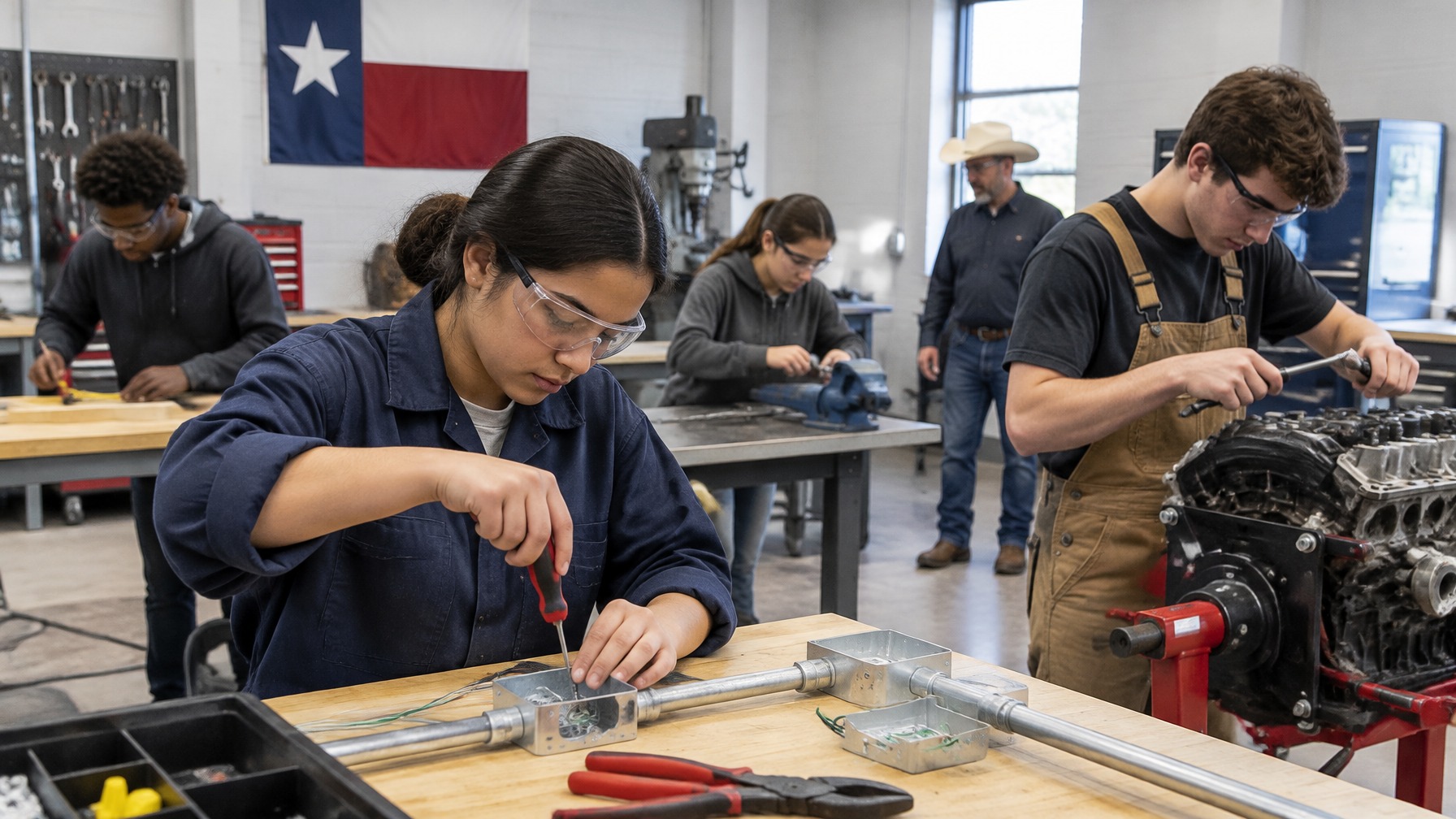
WorkTexas operates differently from a conventional vocational school.
Its training programs are developed with input from employers who identify the technical skills and professional habits they expect from new workers. More than 100 businesses have contributed to curriculum development, helping connect instruction with actual hiring needs.
Most programs last approximately 11 weeks and involve around 170 hours of participation. Many students attend without paying tuition, supported by public workforce development funding and other resources.
But the organization’s most distinctive feature may be what happens after training ends.
WorkTexas follows graduates for at least five years, with career coaches checking on employment, wages, job satisfaction, and opportunities for advancement.
Those relationships can become especially important when graduates encounter setbacks.
A worker may lose access to transportation, struggle with childcare, or discover that an initial job offers limited prospects for advancement. Career coaches can help identify resources, discuss new opportunities, or connect alumni with additional training.
The approach requires sustained attention to individual circumstances rather than relying exclusively on standardized services.
That creates a challenge for expansion.
Adding more classrooms may increase the number of students receiving instruction, but maintaining meaningful relationships with graduates requires staff, funding, employer connections, and community resources.
Feinberg’s broader work in education and workforce development reflects an effort to balance ambitious institutional goals with the practical needs of the people those institutions serve.
The question is not simply how many students WorkTexas can enroll. It is whether the organization can preserve the support needed to help those students build lasting careers.
Expanding the Model Without Replicating Every Institution
One possible answer is to expand the approach rather than the organization itself.
WorkTexas began operating inside Gallery Furniture, the Houston retail business owned by McIngvale. The location provided an unconventional setting for vocational education while drawing on existing business relationships and community resources.
Its Opportunity Center, which opened in 2022, developed through a different partnership. The Harris County Juvenile Probation Department provides academic instruction and much of the funding, while WorkTexas offers vocational training and connections to support services.
The two campuses serve different populations, yet both rely on organizations contributing their particular strengths.
A similar philosophy has informed efforts outside Houston.
In Austin, a housing company interested in training apartment maintenance technicians worked with a trade association, Goodwill Industries, and local apartment businesses to establish a program based on comparable principles.
The first cohort launched in April 2025.
Rather than requiring WorkTexas to open and operate another campus, the Austin initiative assembled local partners capable of providing training, facilities, and employment opportunities.
That distinction offers a potentially useful approach to expansion.
Communities differ in their labor markets, available funding, transportation systems, and nonprofit resources. A program designed around Houston’s employers may need substantial adaptation to serve workers in another city.
Local partnerships can provide that flexibility while preserving the broader principles of employer involvement, practical instruction, and continued support.
Feinberg’s recognition through the Schwab Foundation’s social entrepreneurship program provides context for his experience developing educational models intended to address problems beyond a single institution.
Still, expansion through partnerships introduces its own uncertainties.
Local organizations must agree on responsibilities, secure reliable funding, and establish ways to evaluate results. Employers need to remain involved after the initial enthusiasm of launching a program. Graduates require continued support even when their needs extend beyond what a training provider can directly address.
And a model that succeeds in one community cannot be assumed to produce identical outcomes elsewhere.
WorkTexas’s five-year alumni tracking system may prove particularly important as these efforts develop. Employment, earnings, and career progression offer more meaningful evidence of long-term effectiveness than enrollment figures alone.
For Feinberg, the experience of building KIPP and WorkTexas illustrates two sides of the same challenge.
Educational organizations need enough ambition to reach people who have been overlooked. They also need enough discipline to examine whether their programs are delivering the outcomes they promise.
The future of WorkTexas may therefore depend less on how many campuses carry its name than on how many communities can successfully adopt its underlying approach.
Growth matters, but only when it expands the opportunity the organization was created to provide.
Leave a Reply